
The Ultimate Guide to 4D & 5D Number Plates
0 Comments
March 3, 2026 in 4d Number Plates Oldham
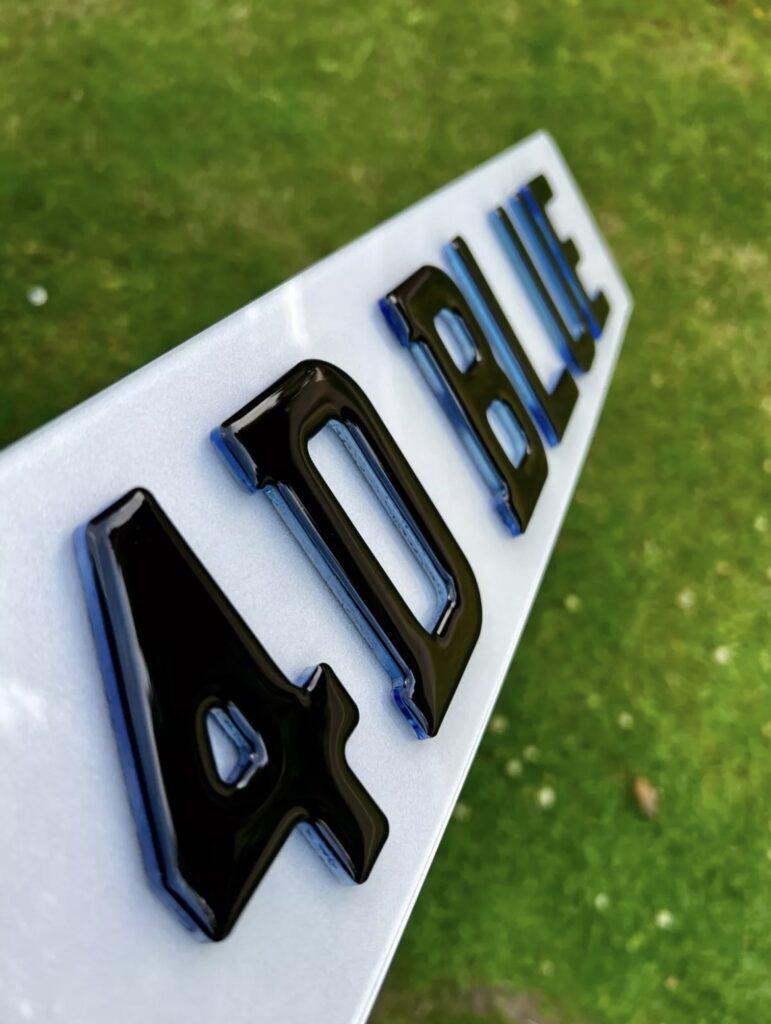
The world of vehicle registration is moving past the standard flat plate. 4D number plates give vehicles a striking, three-dimensional look that significantly boosts their presence. If you want to upgrade your vehicle’s appearance while staying fully compliant with UK road laws, this guide is for you. We look closely at how these modern registration plates are made, their legal standing, and the customisation options available, showing why PlateMonkey.co.uk is your best choice for high-quality, road-legal registration plates.
4D number plates offer a much greater visual impact than traditional registrations. They get their depth because the characters are precisely cut from rigid materials and then firmly attached to the reflective backing plate. This process creates a noticeable raised effect, casting shadows that give the registration a sharp, high-definition appearance.
To really see the value of the 4D style, it helps to see how plate technology has developed:
While 4D is the established term for laser-cut raised characters, 5D number plates often describe an upgraded look. These plates usually have the sharp, raised acrylic characters of a 4D plate but include extra visual features. This might mean multi-layered acrylic characters, special coloured borders, or adding 3D gel elements around the characters or the plate edge. Remember this: no matter what style name is used—4D or 5D—the basic legal rules for font, spacing, and reflectivity must be strictly followed.
Yes, 4D and 5D number plates are completely legal for use on UK roads, as long as they strictly follow the rules set by the Driver and Vehicle Licensing Agency (DVLA). The look must never come at the expense of legal compliance.
The DVLA requires several standards that cannot be compromised for any vehicle registration plate displayed in the UK:
For a number plate to be legal, the material used must meet the British Standard specification, currently BSAU 145e (or the most recent applicable standard). Reliable suppliers, like PlateMonkey.co.uk, make sure the backing plates and materials used in 4D and 5D plates meet this strict standard for durability and light reflection.
Using a plate that doesn’t meet these standards can lead to serious trouble:
Failing to comply can result in an immediate fine of up to £1,000 and failing the mandatory annual MOT test.
The premium look of 4D and 5D plates comes from the quality of the materials used to build them.
Acrylic is the main material for the raised characters. It’s chosen because it is very rigid, resists weather well, and holds sharp edges after being cut. Good quality acrylic ensures the characters won’t warp or fade after long exposure to sun and bad weather.
Often used as another name for acrylic, Perspex refers to a specific brand of acrylic known for being clear and tough. It resists UV damage better than cheaper plastics.
The backing plate must use sheeting that meets certification standards. This material is designed to bounce light directly back to its source (like headlights), making sure the registration is visible to enforcement cameras and other drivers at night.
How strongly the raised characters stick to the backing plate is crucial. Industrial-grade, weather-resistant adhesives are used to keep the characters firmly attached, even under high pressure or extreme temperatures.
Making 4D plates requires precision engineering, which explains their better finish compared to standard plates.
For detailed shapes and sharp edges, laser cutting is the preferred method. A powerful laser precisely cuts the acrylic characters from a sheet, ensuring every edge is clean and exact—something vital for meeting legal size requirements.
Computer Numerical Control (CNC) machining might also be used, especially for complicated 5D designs or when specific depths and angles are needed for the raised parts. This process allows for high accuracy and repeatability.
Once the characters are cut, they are carefully placed onto the reflective backing plate. This is often done by hand to guarantee perfect alignment according to DVLA spacing rules, followed by applying the strong adhesive.
Customisation lets owners tailor their registration mark to their vehicle’s style, as long as all legal limits are respected.
While the standard Charles Wright font is required for road use, some suppliers offer variations in the style of the raised characters (e.g., slightly bolder or thinner cuts) that still fit within the required dimensions.
The depth of the 4D characters is the main difference. You can choose how thick the acrylic is, which determines how far the characters stand out from the plate surface.
Many 4D and 5D plates include decorative borders. These can be simple coloured lines or more complex, layered frames. When picking a border, make sure it doesn’t cover up any part of the registration mark itself.
Character colours are strictly controlled: black characters on a white front plate, and black characters on a yellow rear plate. However, customisation often applies to the border colour or the colour of the acrylic material itself, provided the main registration markings stay compliant.
When selecting your new registration, you should balance personal taste with practical things to consider.
A very aggressive, deep 4D plate might look right on a modern sports car, while a more subtle 3D/4D mix might suit a classic vehicle better. For specific marques, check out our dedicated ranges like Audi or Ferrari options.
Because of the precise manufacturing involved, 4D and 5D plates cost more than standard printed plates. Account for the price of good materials and the complexity of the cutting process.
Always confirm that the supplier guarantees the plate meets the current BSAU 145e standard and DVLA spacing rules. If you are unsure, always choose the safest, most compliant setup. See our full range of Show Plates for non-road legal customisation examples.
In the end, your number plate is a key way to identify your vehicle. Pick a style that shows off your personality, whether that means sleek simplicity or bold dimension.
Installing the plate correctly is vital to keeping the plate looking good and preventing it from being lost or damaged.
Depending on how you choose to fit it, you will need:
Clean the area on the vehicle where the plate will go thoroughly. Remove all dirt, wax, and residue using alcohol so the adhesive sticks properly.
If you are using high-strength adhesive pads (often included with premium plates):
If your vehicle needs screws or you prefer that method:
Use a spirit level or a reliable measuring tool to check that the plate is perfectly level before the final fixing. If it’s crooked, it’s immediately obvious and ruins the premium look of the 4D characters.
With the right care, your dimensional plates will keep their sharp look for years.
Use a soft cloth or sponge and clean water. Gently wipe the surface to remove road dirt and dust. For a truly pristine look, explore our Number Plate Flags and keep the main plate clean!
Only use mild, non-scratch car wash soap or plain water. Do not use harsh chemicals, pressure washers aimed directly at the characters, or rough sponges, as these can harm the acrylic or the adhesive bond.
Be careful when washing or polishing the front of your car. Try not to scrape the raised characters with brushes or cloths, as this can scratch the acrylic finish.
Beyond the basic structure, you can tailor the look a lot, always keeping the legal rules in mind.
While the main characters must be black on a white/yellow background, some styles allow for small colour differences on the edges or within multi-layered 5D designs, as long as the overall contrast stays high and compliant.
Look into different border thicknesses and colours. A subtle chrome or gloss black border can really change the plate’s profile without breaking the law. Check out our Ford and Hyundai sections for vehicle-specific styling ideas.
You can order standard UK sizes or ask for specific sizes, like shorter plates for certain imported vehicles or motorcycles, provided the rules for character height and spacing are still followed for the characters shown.
The DVLA’s main concern is readability. Any customisation that makes the registration mark hard to read from a distance, or that uses non-standard colours for the registration characters themselves, makes the plate illegal.
The move toward dimensional plates suggests that consumers increasingly want to personalise their vehicles.
We are seeing more interest in illuminated number plates (where the characters light up) and, in some countries abroad, fully digital displays.
Even if digital plates eventually become common, the solid, tactile quality of high-grade acrylic 4D plates means they will stay a popular, long-lasting, and legally simple upgrade for the foreseeable future. For premium vehicle owners, explore our BMW M Sport range for inspiration.
Ready to change your vehicle’s look? Check out the full selection of compliant, high-definition 4D and 5D number plates available at PlateMonkey.co.uk today.
Shop 4D Number Plates Now
About the author